Should I Pursue Credit for Prior Learning through Individualized credit requests?

Deciding whether to pursue college credit through assessment of your experiential knowledge requires some thought. Carefully consider the following four questions. If you can answer them easily, you may want to think about pursuing the CPL process to request credit for knowledge you’ve gained through experience, outside of traditional classroom learning.
CPL Self-Assessment
This is a quick, initial self-assessment; there’s fuller information about experiential learning on other pages of this text.
If you’re considering pursuing credit through iCPL requests, you need to be able to answer the following self-assessment questions easily for all of the areas for which you’re considering requesting credit from your experiential learning.
-
What?
What knowledge have I gained through my experience? Can I easily describe what I have learned from my experience, self-study, and/or work training so that I could teach what I know to others?
-
How?
How did/how would I use this knowledge in different situations?
-
Why?
Why did I use the knowledge in this way – because of past experiences and my evaluation of their outcomes, and/or because I can project a future outcome based on my experience?
4. Where?
Where can I apply information about and credits resulting from prior learning assessment?
The likely application is credit toward your degree. Is there room for credit through prior learning in your degree? Do you intend the credit for prior learning to substitute for a course? (Your mentor/advisor has access to transcripts and degree information to help you decide if you have room for credit from prior learning in your degree).
Please know that if you don’t have a lot of room for credit from prior learning, you still may benefit from doing a some credit requests, since the act of investigating learning helps you identify and articulate your learning for professional and career purposes.
Key Takeaway
Examining your prior experiential learning requires identifying, thinking about, and articulating what you learned, so please take time to consider the above questions for each area of knowledge in which you want to request credit through the credit for prior learning process.
Examples to Help you Decide
Customer Service
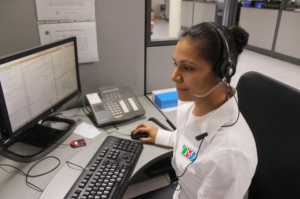
Student 1 could easily describe what he learned about customer service: figuring out what a customer really needs, communicating with professionalism and empathy, de-escalating a situation, identifying possible solutions to a customer issue, what generally constitutes good and bad customer service using industry standards. He could explain how and why he applied this knowledge differently in different situations. And he could explain why he might approach one of these situations differently in the future.
Student 2 had a harder time describing what she learned about customer service; she kept coming back to the fact that she had been in the field for 10 years, had been successful in her job, received two promotions, and was now functioning as a customer service supervisor.
She thought about how she used her knowledge in different situations, and realized that she always followed company protocol. When she thought about why, she realized “that’s what I was told to do when I was hired.”
Student 1 has the potential for pursuing credit for his experiential knowledge; Student 2 may not, unless she considers and describes her knowledge more deeply and broadly.
Equine Studies
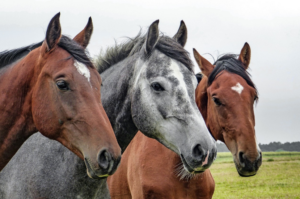
Student 3 worked on a family horse farm for many years. She never considered that this experience might have resulted in knowledge that could be pursued for college credit. However, when she considered the What? How? Why? and Where? questions, she realized that she had gained college-level knowledge from her experience. She could easily describe what she learned and had, in fact, taught others about different feeds and nutrition, identifying and remedying health issues, breeding, stable and ranch management, history of different breeds, and therapeutic horsemanship. She could explain how she identified different equine health issues and why she used certain remedies, and she could additionally explain how and why for other topics within this area of expertise. She realized that she had the potential for pursuing credit for her prior experiential learning.
Another Example
Not all similar experiences have the same learning outcomes. For example, consider the following two students, Suzanne and Tom. They each own a restaurant and are involved in its day-to-day operations. Since their experience is similar, one might expect them to have the same knowledge and skills, but that isn’t always true.
Tom began cooking in the military and, after he returned to civilian life, focused on preparing gourmet meals. He started a local cooperative so he could buy fresh, local products. In addition, he learned a lot about nutrition because of some personal health problems, and he has been incorporating this knowledge into menu choices.

Suzanne focused more on the business aspect of her restaurant. She developed a marketing plan and is trying to expand into a catering business in addition to running the restaurant. She does the accounting for the business. She also is on the board of the local homeless shelter, which she became involved with when she realized that some of the food not used by her restaurant could be donated.
When these two students started to investigate knowledge gained from their experience, they discovered that they knew different things. Tom had gained knowledge of nutrition, food preparation, and running a cooperative. Suzanne had gained knowledge of marketing, small business management, accounting, and community organizing.
Key Takeaway:
More Information to help you Decide
 Empire’s catalog page on Individualized Credit for Prior Learning provides a good overview of the possibilities.
There are also very useful videos on the page Prior Learning for Current Students – Exploring your Knowledge (login required)
