Adaptability & Learning how to Learn
There are two major sections on this page:
Choose one of the sections that’s most relevant to your situation, read that section, and complete one learning activity in the section.
Adaptability
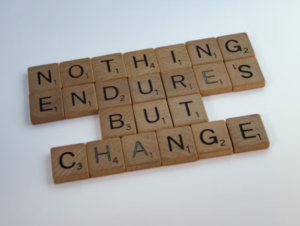
Adaptability is the ability and willingness to change in response to changing conditions, environments, or needs. The concept of willingness is important – adaptability means that you can deal with change with a positive mindset for learning new things.
Employers value adaptable workers who can change in response to the changing needs of business. Adaptable workers can be re-trained faster since they are not resistant to learning, and they often hone their ability to “think on their feet” and solve problems as they deal with new situations. Adaptable workers reduce downtime and stress in their organizations.
Read/View:
- GetSchooled’s page on Durable Skills: Adaptability
- BBC’s page on How adaptability helps you ‘bounce forwards’ at work
- Indeed.com’s Adaptability in the Workplace: Benefits and Importance
- Indeed.com’s 6 Important Workplace Adaptability Skills (With Examples)
This video discusses stages of adapting to a situation.
This video provides additional tips on developing adaptability skills.
This video offers some interesting insights into the skill of adaptability from a business person’s point of view.
Consider your adaptability skills by trying a self-assessment.
- University of Denver How Adaptable Are You?
- Masterstart Adaptability Self-assessment
- Melbado Adaptability Self-Assessment Test
Learning Activity for Adaptability
Introductory Level
The “What is Adaptability” video identified four steps in adapting to change:

- feeling uncomfortable
- trying to understand the change
- thinking about how you will adapt
- adapting
Consider an experience that you had with change and write a short (3-4 page) essay answering the following questions:
- Describe the experience.
- Explain your feelings and experiences as you dealt with this experience of change. Did you go through all of the steps or not? Which steps did you go through, and how did they move you toward the change?
- Did you eventually accept the change?
- Analyze the experience and what you might do in the future to foster the skill of adaptability in upcoming situations in which you are confronting change. What specific things can you do to lessen discomfort, understand the change, and think about how to adapt?
Learning Activity for Adaptability
Advanced Level
The video “3 ways to measure your adaptability” mentioned using “What If?” questions in a job interview to gauge a person’s adaptability.

Work with the following “What If?” scenario:
You are a human resources manager. What if your company has seen a 20% increase in employee turnover during the last two years?
Brainstorm at least three strategies/actions you might take to rectify the problem from each of the following perspectives:
- your own perspective
- new employee
- long-time employee
After writing strategies for all three roles, analyze them. Where do the strategies overlap and diverge? What do the differences show about how adaptability depends on role, perspective, and priorities?
Synthesize your strategies into a three-part action plan for the company’s CEO to explain how the company might adapt to address the turnover issue. As you synthesize, you may decide to delete some of the strategies you brainstormed, and/or add some strategies.
-
Short-term actions (quick fixes within 0–6 months)
-
Medium-term actions (structural/cultural changes in 6–18 months)
-
Long-term actions (systemic reforms, 18+ months)
Write the results as a 1–2 page action brief, as if you were submitting it to company leadership.
Submit:
- the three ideas brainstormed from each perspective
- your brief analysis of brainstormed ideas – similarities, differences, roles and perspectives
- the action plan
- explanation of how you adapted your brainstorming results to create the more formal action plan, and why
Learning how to Learn
Learning how to learn involves knowing basics about how the brain works.
Read the article “What is Learning? You and Your Brain,” by Nan Travers, Ph.D.
View the following two videos, which deal in different ways with learning how to learn.
Read the page 3 Adult Learning Theories Every E-Learning Designer Must Know. Although this is directed toward instructional designers, it provides a brief overview of ways in which adults learn, ways which show the way the adult brain works using specific examples.
Key Takeaway – Connections
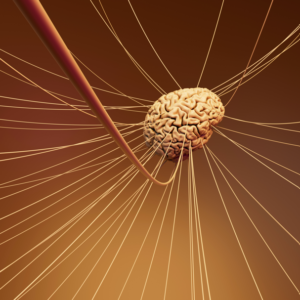 Learning how to learn is all about making connections:
- making and connecting pathways in your brain through practice
- connecting new learning to what you already know
- building on past and current learning to create new learning goals
In order to create connections, there are three learning strategies you can apply to support and facilitate learning:
- active learning
- reflective learning
- self-directed learning
Active Learning
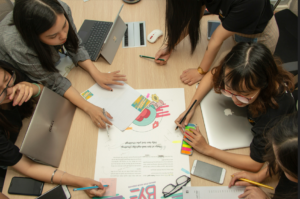
There has been a lot of research into active learning as a teaching methodology. Active learning teaching techniques include such things as project- and problem-based learning, case studies, discussions and small group work, concept mapping, and more. Teaching techniques that support active learning essentially encourage students to be active at doing something – planning, discussing, evaluating – as opposed to passively listening or individually reading. Many research studies have shown that active learning techniques help raise student comprehension, retention, grades, and completion rates.
However, you don’t have to rely on an instructor to create learning activities that promote active learning. As a learner, there are many things that you can do to approach learning actively, activities that strengthen learning.
For something you need to learn about through reading
If you need to learn via an article, instructions, policy manual, etc., first scan the text to get a sense of main ideas.
Before you read, think about those ideas. Have you encountered them or something similar to them in a different context? What in your past experience links to the information in the text?
As you read, engage with the text. Annotate it or keep a running list with ideas that occur to you as you read, questions that you have, experiences you’ve had that illustrate the content. The more you can interact with a written document, the more deeply you will learn and remember its information and ideas.
For learning that’s not based on reading
Ask questions, take notes, and make linkages with other experiences as you observe a process or create an object. Talk with others to share insights and questions.
Active learning techniques help to create connections and linkages in your brain, which is constantly changing and re-wiring itself. (This is called plasticity, in case the concept interests you and you want to learn more about it.)
Active learning is based in brain science, as explained in the following video, which states that the more connections you make among experiences and ideas, the more you learn.
This video focuses on the benefits of active learning.
Active learning techniques help you understand and retain information, which in turn helps you apply that information in new situations. Active learning techniques foster adaptability, since they provide some concrete ways of dealing with change.
Reflective Learning

While active learning focuses on engaging with activities and others “in the moment,” reflective learning focuses on thinking back over what happened in those moments.
A quotation attributed to John Dewey, a famous educator, is that “We do not learn from experience…we learn from reflecting on experience.”
Reflection is an important part of learning how to learn, since thinking about what happened allows you to analyze what worked and didn’t work. Reflection also helps you make connections among past experiences and learning situations.
Reflective learning additionally has a forward-looking component, in that you use your analysis to determine what your next steps in learning might be. Reflection helps you become a more active and self-directed learner.
View the following video which discusses the importance of reflection in learning.
Read an article on Schön’s Reflective Practice: Benefits, Steps & Examples. Donald Schön developed the concept of reflective practice, which provides a practical application of the idea of reflective learning.
Reflective learning is actually based in what we now know about brain science, in terms of the brain’s proclivity for patterns and the brain’s need for both focus and rest. View the following video that presents basic brain science concepts that the support the need for reflective learning.
Self-Directed Learning
Self-directed learning occurs when you take ownership of your learning – what you want to learn, how to go about it, and next steps. It combines and results from active and reflective learning.
Think about the times in your life when you wanted to know or learn something, the times you pursued knowledge entirely on your own because the topic interested you.
Maybe you wanted to learn how to play guitar or another musical instrument just for fun. Or maybe you wanted to be a different kind of “rock star”—to master a difficult recipe or a DIY project you found on Pinterest. Maybe you taught yourself a craft for your own enjoyment. Perhaps there was an intriguing online post that inspired you to start following a certain feed or to learn more about a particular cause.
These are all examples of self-directed learning. This term is common in higher education theory and in conversations about the different ways we learn in both informal and formal settings. According to the renowned adult educator Malcolm S. Knowles:
“Self-directed learning is a process in which individuals take the initiative, with or without the help of others, in diagnosing their learning needs, formulating learning goals, identifying human and material resources for learning, choosing and implementing appropriate learning strategies, and evaluating learning outcomes.” [1]
Knowles identifies several key aspects of learning that are self-directed, rather than managed by others. In this definition he argues that individuals determine their own learning needs and how to achieve their individual goals. Self-directed learners identify the resources they need to be successful at learning and develop their own learning strategies. Self-directed learners also evaluate the extent to which they achieve their own learning goals.
Example of Self-Directed Learning
A person wants to learn how to play the guitar. To begin, they look up background information and watch YouTube videos on how to play basic guitar chords. Then they visit WikiHow for specific lessons on guitar chords.

They spend a lot of time practicing and working from sounds and techniques that they observed on their own. Then they signed up for and worked through an online course from a music college.
As an ongoing process, they constantly evaluated and re-evaluated their learning to determine the next step in what they needed. A self-directed learner reflects on their own learning, where they are, what worked and didn’t work for them, and what to do next.
Self-directed learning doesn’t mean that you learn alone. Self-directed learning can take place in a university course as well as a living room. A learner in a course may show self-direction by opting to go above and beyond what is expected, or they may pursue learning materials outside of a particular course, such as university resources or online tutorials, because they know they need more help learning.
- Take the University of Illinois/Springfield’s brief self-assessment on their page Self-Directed Learning.
- Read The Training Industry’s page on The Power of Self-directed Learning which discusses this process in generational and workforce contexts.
- Read CourseSource’s page on Active Learning: Developing Self-Directed Learners Through Strong Intellectual Engagement. Although this article is written for an audience of science educators, it offers a good overview of the concepts of active and self-directed learning.
This is an interesting TEDx talk about self-directed learning.
Learning Activity for Learning how to Learn
Introductory Level

Answer the five questions at the end of the article by Nan Travers, Ph.D., “What is Learning? You and Your Brain,”.
- What does it mean to your learning to know that your brain makes new neurons and is always changing?
- Have you had situations where you believed something regardless of other evidence? Was there an event that changed your perspective? In what way was it changed? What can you learn from this shift? How could that experience help you in future ones?
- If experiences change the way that the brain functions, how can you take advantage of this?
- How can the “I” (actor) that is experiencing the situations and events of the moment and the “I” (director) who is editorializing and influencing the results be used to augment each other? How can you take advantage of these relationships in new settings and situations?
- How can you use what you have learned about your brain to learn a topic or a new job?
Make sure to answer fully. In your answers, reference information from other sources on this page.
Learning Activity for Learning how to Learn
Advanced Level
Identify something co-workers or peers in a community project need to learn.
Create three different learning activities that apply information about how the brain works and strategies of active, reflective, and self-directed learning.
Refer to the article on 3 Adult Learning Theories Every E-Learning Designer Must Know as well as to information about how the brain learns.
As you write out each learning activity, include your rationale for that activity, referencing the article on adult learning theories and information on how the brain functions.
Finally, explain how your learning activities apply techniques that support active, reflective, and self-directed learning.
Submit: three learning activities with their rationales and explanations
- Knowles, M.S. (1989). The making of an adult educator: an autobiographical journey (1st ed.). San Francisco, Calif.: Jossey-Bass. ↵
